
![[Translate to English:] Wasseraufbereitung im Bergbau](/fileadmin/_processed_/5/1/csm_pexels-oscar-sanchez197-18928150_830b518429.jpg)
Table of Contents
WATER TREATMENT IN MINING
Mining involves the extraction of mineral resources from the ground. As operations advance into deeper geological layers, mining activities inevitably encounter groundwater-bearing strata. The resulting mine water must be continuously removed to ensure underground safety and uninterrupted production. At the same time, this water is often reused as process water or for fire protection purposes.
However, the quality of mine water places specific demands on the equipment used. High levels of solids such as sand, rock abrasion and sludge can impair system components and lead to increased maintenance requirements. Tailored water treatment is therefore a key element of modern mining operations. This article outlines the origin and use of mine water, typical challenges, and technical solutions for reliable and efficient filtration in mining.
AT A GLANCE
- Mine water is an unavoidable by-product of mining and must be continuously removed to ensure safety and reliable operations.
- Suspended solids and dissolved substances place high demands on equipment and can lead to wear, clogging and increased maintenance if untreated.
- A combination of separation and filtration enables effective water treatment, reduces system load and improves operational reliability.
WATER IN MINING: IMPORTANCE AND DEWATERING
Water is a natural and unavoidable component of mining activities. In both underground and open-pit mining, operations encounter aquifers, water-bearing rock layers and inflowing surface water as excavation progresses into deeper strata. With increasing depth, water pressure typically rises, leading to continuous inflows. Without adequate dewatering measures, tunnels, shafts and stopes risk flooding, compromising safe operations.
Mining activities also alter natural groundwater flow paths. New voids are created, existing barriers are disrupted, and water can enter mine workings in an uncontrolled manner. Efficient dewatering systems, including pumps and pipelines, are therefore essential to maintain stable operations.
Mine water refers to all water entering underground mine workings. It originates from groundwater as well as infiltrating rainwater and surface water, and dissolves minerals as it flows through surrounding rock.
At the same time, mine water represents a potentially valuable resource. After appropriate treatment, it can be reused as process water, for dust suppression or in fire protection systems. Controlled collection, management and reuse of water are therefore not only safety-critical but also key to efficient mining operations.
CHALLENGES IN HANDLING MINE WATER
Mine water is omnipresent in mining and poses significant challenges for equipment and operations. It often contains large amounts of solids such as sand, rock particles, sludge and fine mineral suspensions. Their composition and concentration can vary considerably depending on the mining area, geological conditions and production phase. Particularly during high inflows or after blasting operations, the solids load increases significantly.
If these solids enter pumps, pipelines or spray nozzles without prior treatment, they can cause wear, deposits and, in the worst case, blockages. Downstream filtration systems can also reach their limits under high contaminant loads, requiring frequent backwashing or manual cleaning. The result is unplanned downtime, increased maintenance effort and higher operating costs.
From early raw material extraction in the Stone Age to large-scale metal mining in the Bronze Age, mining has long been a key economic driver. Metals such as copper, salt and iron were already being mined and traded thousands of years ago, forming the foundation for technological and societal development.
In addition to solids, mine water may also contain dissolved minerals that promote corrosion. Water treatment tailored to specific operating conditions is therefore essential to protect equipment, reduce maintenance effort and ensure reliable long-term operation.
FILTRATION AND SEPARATION AS KEY SOLUTIONS IN WATER TREATMENT
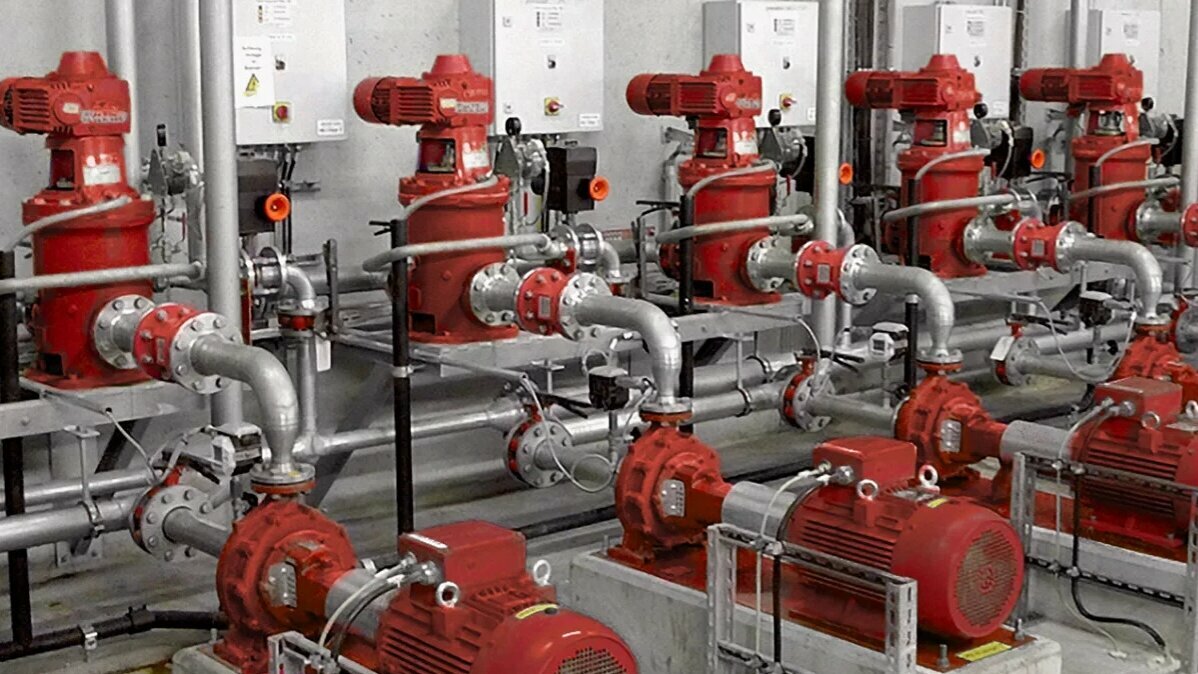
To safely use mine water as process or operational water, targeted removal of solids is essential. Filtration and separation systems play a central role in this process. While downstream filters remove fine particles from the water stream, upstream separation systems are primarily used to remove coarse and heavy particles such as sand and rock fragments.
This multi-stage treatment significantly reduces the solids load within the system. Pumps, valves and pipelines are protected, wear is minimized and operational reliability is improved. At the same time, filter element service life is extended, as the contaminant load is reduced in advance. This leads to fewer cleaning cycles, lower maintenance requirements and higher system availability.
Mechanical filtration and separation processes operate without chemical additives and can be integrated into both stationary and mobile system concepts. They therefore represent an economical and robust solution for ensuring reliable operation of water-bearing systems in mining.
Filterautomat
Are you planning a solution for mine water treatment or looking to optimize your existing filtration and separation systems?
We support you in selecting suitable technologies, designing your systems and integrating them into existing processes.
Feel free to contact us – we will be happy to advise you personally.
CASE STUDY: OPTIMIZATION OF PROCESS WATER FILTRATION IN MINING
DANGO & DIENENTHAL Filtertechnik supported a major mining company in the Kuzbass region in optimizing its process water filtration for a fire protection system. The mine water used was heavily contaminated with sand, small stones and sludge. The existing automatic filters were unable to reliably handle the high solids load and became clogged on a regular basis. As a result, frequent backwashing cycles and additional manual cleaning were required, consuming time, personnel resources and costs.
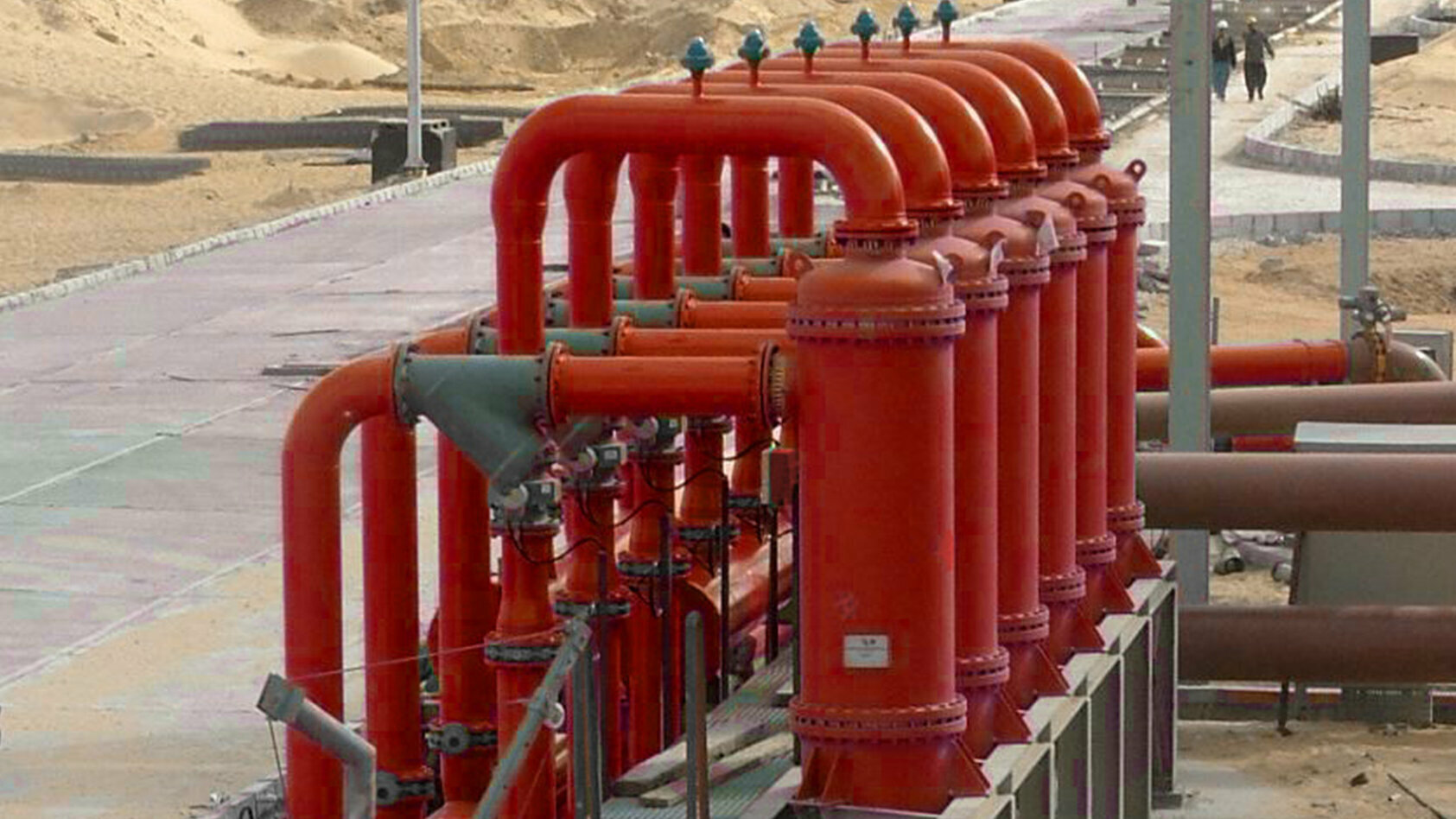
To sustainably relieve the existing filtration system, a separator from DANGO & DIENENTHAL was installed upstream of the automatic filters. It is specifically designed to remove heavy particles with a density greater than 1.3 kg/dm³. Sand and rock particles are thus efficiently separated from the water stream at an early stage.
After implementation, the backwashing intervals of the automatic filters were significantly extended, while manual interventions were reduced to a minimum. The result was improved operational reliability, reduced maintenance effort and a sustainable stabilization of process water treatment.
CONCLUSION
Water is both a safety-critical and economically relevant factor in mining. Mine water generated during extraction must not only be reliably removed but is often reused as process or fire protection water. However, the contained solids such as sand, rock fragments and sludge place high demands on pumps, pipelines and filtration systems. Without proper treatment, wear, clogging and unplanned downtime can occur.
A combination of separation and filtration provides a robust and cost-effective solution. By removing heavy particles at an early stage, downstream filtration systems are relieved, maintenance intervals are extended and system availability is increased. The case study from DANGO & DIENENTHAL Filtertechnik demonstrates that investing in appropriate pre-filtration can pay off quickly. In addition to reduced maintenance costs, mining operations benefit from stable, safe and reliable system performance.
FAQ ON WATER TREATMENT IN MINING
Mine water is all water that enters mining operations, including groundwater as well as infiltrating rainwater and surface water. As it flows through rock, it absorbs minerals and solids, altering its composition.
Mine water is often reused as process water and must meet specific quality requirements. Treatment also protects pumps, pipelines and filters from wear, deposits and failures.
The composition of mine water can vary significantly depending on geological conditions, mining phase and inflow. These fluctuations require flexible and robust treatment solutions.
After treatment, mine water can be reused for various applications such as process water, dust suppression or fire protection, reducing freshwater demand and operating costs.
A combination of separation and filtration has proven effective. Coarse and heavy particles are removed first, followed by finer filtration. Solutions from DANGO & DIENENTHAL Filtertechnik are based on this principle and help reduce system load, extend maintenance intervals and improve operational reliability.